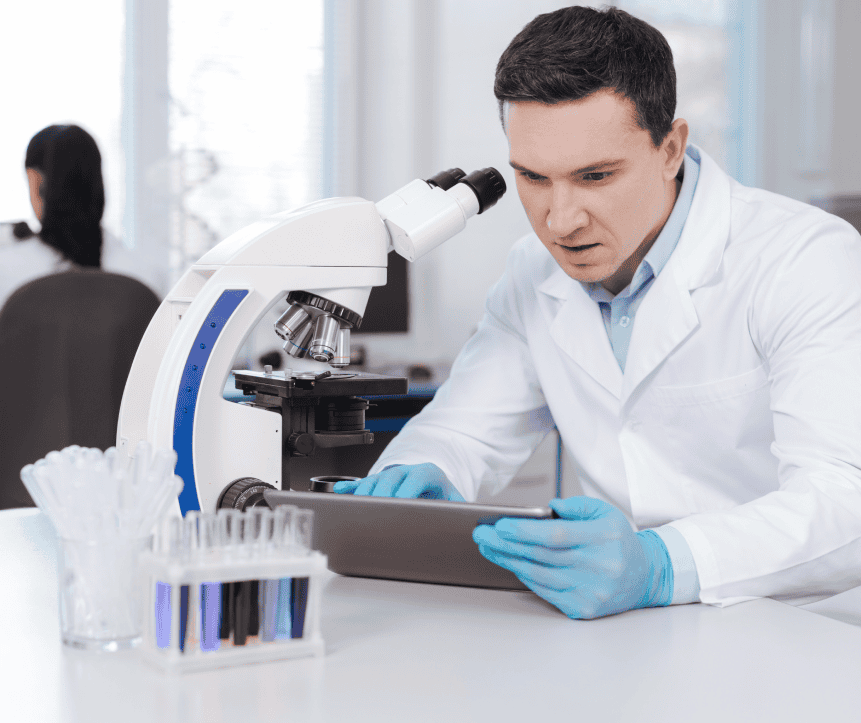
Biological Monitoring is a key occupational health service that assesses workers’ exposure to hazardous chemicals by analysing substances or metabolites in biological specimens, such as urine or breath. This service is crucial for detecting chemical absorption via all possible routes, ensuring employee safety, and maintaining compliance with health and safety regulations.
Detect early signs of skin conditions
for prompt treatment.
Identifies the presence of hazardous substances in the body before they cause health issue, ensuring a safer working environment.
Effective Control Measure Evaluation
Demonstrates the efficacy of workplace control measures such as PPE, ventilation, and hygiene practices, allowing for timely improvements.
Compliance with Regulations:
Helps businesses meet legal obligations under the COSHH Regulations 2002 and other relevant health and safety laws, including specific requirements for lead exposure under the CLAW Regulations 2002.
Industry-Specific Customisation
Tailored to address the unique risks of industries prone to chemical exposure, providing targeted protection for workers in sectors like automotive painting, construction, and manufacturing.
Early Detection and Prevention
Enables early identification and intervention for exposed workers, reducing the risk of occupational illnesses and enhancing overall workforce health
Comprehensive Chemical Exposure Assessment: Utilises biological samples such as urine, breath, or blood to measure exposure to hazardous chemicals, ensuring a thorough evaluation of all possible absorption routes, including inhalation, ingestion, and skin contact.
Legal Compliance and Safety Assurance: Helps employers comply with the Control of Substances Hazardous to Health Regulations 2002 (COSHH) by evaluating the effectiveness of control measures like personal protective equipment (PPE) and workplace hygiene practices.
Industry-Specific Application: Especially valuable in industries with high exposure risks to hazardous chemicals, such as automotive painting, welding, construction, and manufacturing, providing critical exposure insights and enhancing worker safety.
Biological Monitoring is a pivotal service in occupational health, focusing on assessing chemical exposures by analysing toxic compounds or their metabolites in biological substances. This method is essential for detecting hazardous substances in the body before they cause adverse health effects. It assists employers in estimating past exposure and assessing individual susceptibility to hazards, enabling timely interventions to prevent disease.
The service’s importance is underscored by its role in ensuring compliance with UK health and safety regulations, notably the COSHH Regulations 2002. It is critical in assessing workplace exposure to hazardous substances, offering an authoritative guide to interpreting biological monitoring results through Biological Monitoring Guidance Values (BMGVs). While BMGVs are not mandatory under COSHH, they provide valuable benchmarks for assessing the effectiveness of PPE, ventilation, and other hygiene measures.
Furthermore, the Control of Lead at Work (CLAW) Regulations 2002 explicitly mandates biological Monitoring for lead exposure, highlighting the regulatory framework’s attention to preventing health risks associated with hazardous substances.
What is included
Detailed assessment of chemical exposure through biological samples.
Guidance on compliance with COSHH Regulations and CLAW Regulations for lead exposure.
Industry-specific Monitoring, particularly for high-risk chemicals like isocyanates and lead.
Evaluation and recommendation of control measures based on monitoring results.
While not generally a statutory requirement across all substances, biological Monitoring is mandated for lead under the CLAW Regulations 2002. For other substances, it is a recommended practice to ensure workplace safety and compliance with COSHH regulations.
How can I determine which chemicals to monitor?
It involves assessing the hearing of employees exposed to harmful noise levels at work to prevent occupational hearing loss.
Which industries most need biological Monitoring?
It involves assessing the hearing of employees exposed to harmful noise levels at work to prevent occupational hearing loss.
Related products
Assessments and Screening
Medicals
Health Surveillance
Specialist Services
Workplace Wellbeing
Occupational Physiotherapy
TESTIMONIAL
“Allen Lane has worked with K2 Associates UK Limited for more than 9 years. Eddie has always provided us with exceptional service, and remarkably quick turnaround. I would definitely recommend them to anyone!”
"We required a service which was quick and easy to book, which efficient and prompt results. K2 provided us with the option of booking medicals in two popular areas of London and a reasonable price, which suited us on several occasions.
Excellent company, friendly and flexible service."
"At NG Bailey we are always striving to reduce risks and protect our people. We have always been able to trust K2A to complete our safety-critical medicals and employee drugs and alcohol testing. The best part about using K2A is we are always confident they will provide the highest possible standards in the timeframes we need."
"The booking, undertaking and delivery of the safety-critical assessments through K2 Associates has been smooth and their assessors have been very professional and efficient. They have helped us (sometimes at very short notice) to accommodate our needs to carry out the assessments at venues of our choice and the delivery of certificates have been processed promptly without any issues."
“Everything was extremely easy with K2 Associates, from the initial enquiry to arranging the training during a global pandemic! Great communication and flexibility during a difficult time. The training was extremely informative and useful not only in the workplace but within our daily lives. Lee was a great trainer, and we look forward to welcoming him back in the future.”
“We were apprehensive at first about the concept and after discussions, I realised that there would be a benefit for our organisation. It was a strange fact that the staff we thought would not buy into the concept did and those that we thought would, did not at first, but now find this a great help to their own personal and business relationships. Whilst the concept is very innovative for our business, we feel it gives our staff a good platform to benefit themselves and also the business. The increase in understanding and contentment has blossomed overt the 6 months that we have introduced this benefit. Thank you for all of your hard work and the support of management to overcome the future hurdles that we may have to contend with.”
“All staff were very pleased with the training delivered, which was pitched at the right tone and presented well. The team enjoyed the interaction with the trainer with very engaging discussions. The online chat function alongside live interaction was great for people who were maybe less confident to speak up. It was very interesting to hear stories of others who were brave enough to open up during the session. The slides were clear and pitched at the right level, without too much technical jargon”