
Forklift safety must be taken seriously. According to international statistics, 1 in 5 workplace fatalities are caused by forklift truck accidents. Those who work in the transportation and storage sector are three times more likely to be killed at work. And at least 27 people die in forklift truck-related accidents at work every year.

Workplace transportation, especially forklift trucks, requires all those involved to strictly adhere to health and safety protocols to ensure the well-being of the operators and their colleagues. Ensuring compliance with medical standards is one of the most important aspects of maintaining forklift truck driver safety.
In this article, we will explore a multifaceted approach to maintaining the health standards of forklift operators, from understanding your legal requirements to how to implement best practices for ongoing health monitoring.
What Are the Legal Requirements for Forklift Driver Medical Examinations?
Understanding the Health and Safety (HSE) Guidelines
The Health and Safety Executive (HSE), Britain’s national regulator for workplace health and safety, plays a pivotal role in setting out the guidelines that underscore the medical fitness of forklift truck drivers.
A core component of these guidelines is the emphasis on conducting thorough medical examinations to evaluate the ability of the driver to operate a forklift safely. It’s not just about being able to drive a forklift. It’s also about ensuring that any medical conditions of the forklift driver don’t pose a risk to them or others in the workplace.
While you might associate Driver and Vehicle Licensing Agency (DVLA) standards with drivers of road vehicles, certain aspects of these regulations extend to operators of forklift trucks, especially concerning medical fitness.
More specifically, DVLA standards set a benchmark for the medical assessment of drivers, including those who operate forklifts, by highlighting conditions and illnesses that may impair a driver’s ability to handle a vehicle safely. Adhering to these standards is vital for ensuring the health and safety of forklift truck operators.
Because it’s so crucial for forklift truck operators to stay compliant, occupational health consultants are instrumental in managing forklift truck drivers’ health and fitness standards. Occupational health companies undertake the responsibility of conducting routine and ad hoc medical examinations deeply rooted in understanding the drivers’ medical history and current fitness levels.
A significant part of ensuring compliance lies in the collaboration between employers and accredited providers to conduct these evaluations, focusing on the absence of health conditions likely to impair the driver’s operational capabilities.
How Often Should Forklift Truck Driver Medical Exams Be Conducted?
Regular medical assessments are the backbone of ensuring sustained compliance with medical standards for forklift operators. While the initial medical examination sets the baseline for a driver’s fitness to operate a forklift, periodic reviews are essential. These examinations are not just about ticking a box but are vital for catching any changes in health status that could affect the ability to drive a forklift safely.
In addition, age plays a significant role in determining the frequency of medical examinations. As forklift drivers age, the likelihood of developing health issues that could impede safe operation increases. Therefore, HSE and DVLA guidelines recommend more frequent medical assessments for older drivers, ensuring that the ageing process does not compromise safety in the workplace transport environment.
It is critical to understand that a change in a driver’s medical condition, perhaps triggered by illness or injury, may necessitate an additional medical examination outside the regular schedule. Situations such as returning to work after an absence of more than one month due to medical reasons or if it’s likely that the illness has impacted the driver’s fitness are scenarios where extra evaluations are crucial for maintaining compliance and safety.
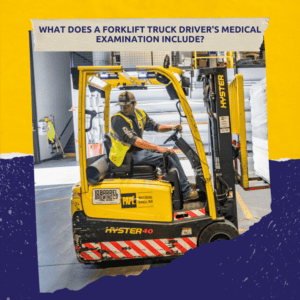
What Does a Forklift Driver’s Medical Examination Include?
Physical Health Checks
A comprehensive medical examination of a forklift driver encompasses evaluating the physical and mental health of the driver. From a meticulous physical examination to a detailed review of the medical history, the assessment is designed to gauge the overall fitness and abilities of the driver to operate a forklift safely. Specific attention is paid to conditions that could impair reactions, cognitive functions, or the ability to handle physical demands.
Mental & Emotional Health
The essence of fitness to operate a forklift lies not only in physical strength but also in mental acuity and emotional stability. An integral part of the medical examination is to ensure that drivers meet the required physical and medical standards. This involves a thorough evaluation of muscle strength, flexibility, and overall physical health, alongside an assessment of mental well-being.
Vision & Hearing Tests
Vision and hearing tests are critical to the medical assessments of forklift truck drivers. The capacity to see clearly and interpret auditory signals is fundamental for safe forklift operation. These tests ensure that drivers possess the sensory abilities crucial for navigating the dynamic environment of a warehouse or construction site where spatial awareness and response to signals can mean the difference between safe operation and workplace accidents.
Common Challenges in Meeting Forklift Truck Driver Medical Standards
Several common health issues, such as musculoskeletal disorders, heart conditions, and vision or hearing impairments, can impair a forklift driver’s ability to operate safely. Proactively addressing these conditions through regular medical surveillance and appropriate occupational health interventions is essential for maintaining the driver’s health and compliance with medical standards.
When a forklift truck driver fails to meet the requisite health and medical standards of a Forklift driver medical, navigating the process of occupational health interventions becomes paramount. This may involve specialised treatment plans, work-duty adjustments, or temporary suspension from forklift operating roles until the driver meets the necessary health criteria.
Employers play a pivotal role in ensuring the health and safety of their forklift operators. Strategies such as implementing effective workplace health monitoring systems, promoting a culture of wellness, and providing access to medical units for regular check-ups can significantly enhance compliance with forklift driver medical requirements. Supporting drivers in maintaining their health not only fosters a safer work environment but also improves productivity and morale among the workforce.
Best Practices for Maintaining Compliance with Forklift Driver Medical Standards
One of the best practices for ensuring compliance is the implementation of comprehensive workplace health monitoring systems. These systems facilitate ongoing assessment of driver health and quick identification of any emerging health issues, allowing for timely interventions.
Engaging with Accredited Occupational Health for Driver Examinations

Collaboration with accredited Occupational Health specialists to conduct medical examinations of forklift drivers is crucial. Such partnerships ensure that medical assessments are thorough, consistent with legal and health standards, and carried out by professionals experienced in occupational health. This provides a high level of scrutiny and reliability in the evaluation process.
Fostering an environment of awareness through education and training on health standards is vital. Equipping forklift truck drivers and managers with knowledge about the importance of medical compliance, how to recognise symptoms indicating health issues, and the procedures for addressing concerns can significantly contribute to a culture of safety and well-being in the workplace.
Find A Reliable, Trustworthy Occupational Health Partner
Ensuring compliance with forklift truck driver medical requirements is a multifaceted process that demands attention to legal standards, regular medical evaluations, and proactive health management strategies. By fostering a culture of health and safety that prioritises regular medical examinations and addresses potential health issues promptly, employers can safeguard their workforce while ensuring operational efficiency and regulatory compliance in the dynamic world of workplace transport.
Partnering with a trustworthy occupational health provider like K2 Occupational Health to focus on forklift driver health and safety is an investment in the sustainability and growth of a business reliant on driving operations. It’s a proactive approach that benefits individual drivers, their employers, and the broader community by ensuring the roads are safer for everyone.