
On-Site Testing: Minimal disruption to your work schedule with our mobile testing units.
Manual Handling Training
- Home
- Manual Handling Training
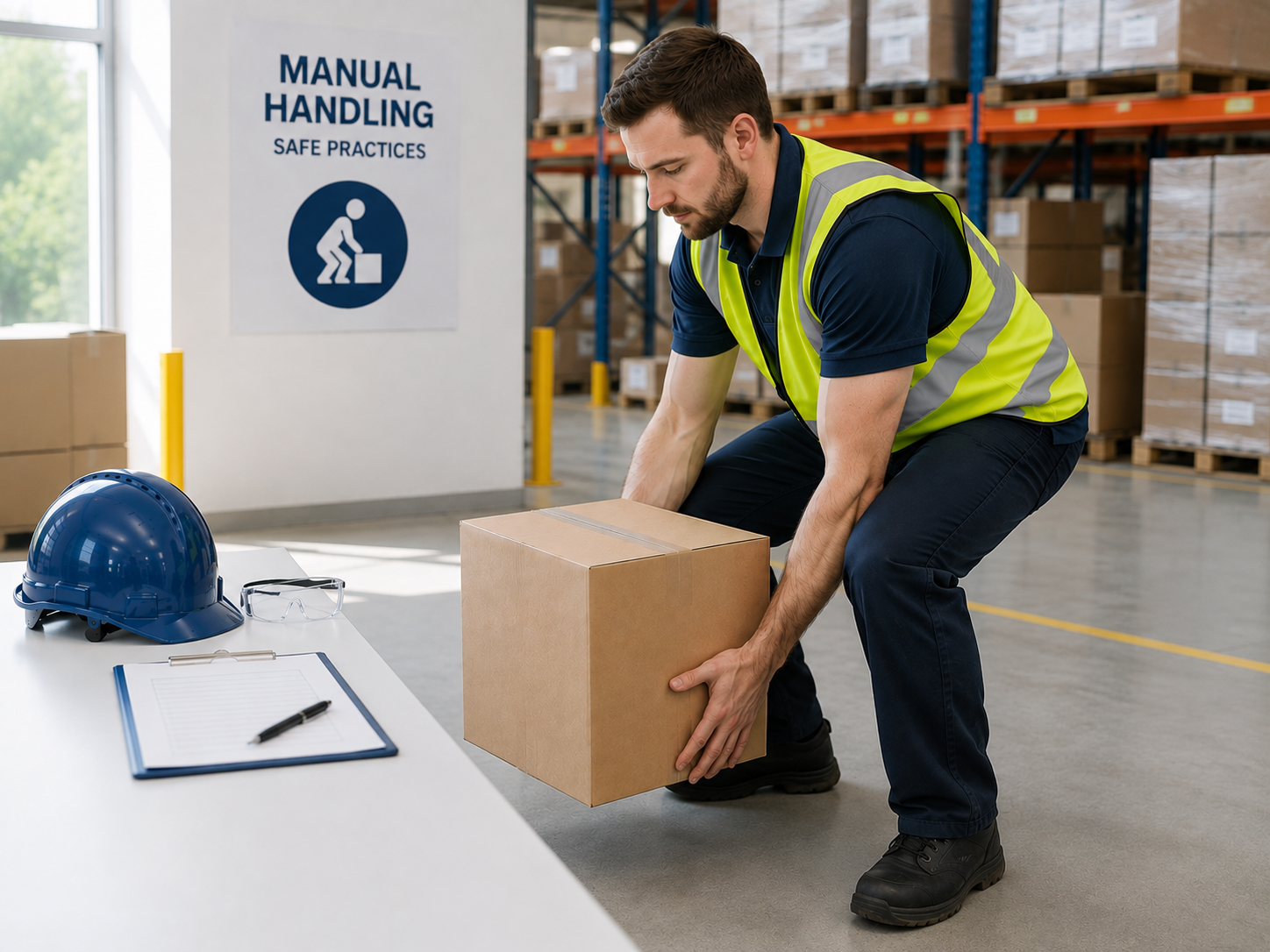
Reduce workplace injuries with K2’s Manual Handling Training, designed to teach employees the correct techniques for safely handling, lifting, and moving objects. This comprehensive program helps prevent musculoskeletal injuries and promotes a culture of safety in physically demanding environments.
K2’s Manual Handling Training is an indispensable service for any workplace where employees must lift, carry, or move items, including warehouses, construction sites, or office environments. Incorrect manual handling is a leading cause of injury at work, and our training program directly addresses this issue by teaching employees the principles of safe manual handling. This includes how to assess risks, proper lifting techniques, and the use of mechanical aids.
The program starts with a tailored assessment of your workplace needs to ensure the training is relevant and directly applicable to your employees’ daily tasks. The course covers the anatomy of common injuries, risk assessment procedures, and practical strategies to avoid injury. Interactive elements and practical demonstrations ensure that participants understand the theory behind safe handling and practice these techniques in a controlled and supervised environment.
Overall, K2’s Manual Handling Training offers a holistic solution to managing and mitigating the risks associated with manual handling tasks. By adopting such a program, organisations can protect their employees, reduce costs, and foster a positive workplace culture centred around safety and well-being.
Features
-
-
Comprehensive Analysis: Utilising the latest technology for accurate assessments of lung health.
-
Expert Team: Our skilled professionals provide a seamless testing experience.
-
Confidential Reporting: Detailed, individual reports ensuring privacy and professional discretion.
Make An Appointment
- 4 Beech Ct, Hurst, Reading RG10 0RQ
Frequently Asked Questions
What does manual handling mean?
Manual handling means transporting or supporting a load by hand or bodily force. It includes lifting, putting down, pushing, pulling, carrying, or moving loads. A load can be an object, person, or animal.
What is manual handling training?
Manual handling training is designed to teach employees the correct techniques for safely handling, lifting, and moving objects to prevent injuries.
Who needs to undergo manual handling training?
Employees who perform physical tasks such as lifting, carrying, pushing, or pulling objects should undergo manual handling training.
How often should manual handling training be refreshed?
It is recommended that manual handling training be refreshed every three years or sooner if there are significant changes in the workplace or the type of work being performed.
Is manual handling training a legal requirement?
Yes, under the Manual Handling Operations Regulations 1992, employers must reduce the risk of injury from manual handling operations by providing appropriate training.
-
Find a location near you
-
Book an Appointment Online!
-
Feel free to message us!
Head Clinic
- 4 Beech Court Hurst,
Reading, RG10 0RQ
Our Commitments
- Social Responsibility Policy
- Modern Slavery
- UK Government Champions Revolutionary Occupational Health Drive April 23, 2024
- Essential Guide to Confined Space Risk Assessment and Working Safely April 23, 2024
- Ensuring Compliance with Forklift Driver Medical Requirements March 20, 2024
- Closing The Workplace Gender Pain Gap March 20, 2024
- Safety First: HSE’s Campaign Aims to Reduce Risks From Metalworking Fluids February 16, 2024
Why Choose K2 ?
- Fast appointments
- Nationwide coverage
- Experienced clinicians
- Trusted by employers
- Helping Businesses Improve Employee Wellbeing